
Sources for Cheshire Previous Residents
A Cheshire house history starts with the current parcel and then changes source as the date moves backward. The table keeps ownership, occupancy, civic context, and historical clues in separate rows.
| Source | Years it covers | Where held | What it shows |
|---|---|---|---|
| Cheshire land IndexBooks | 1780-1931 | Town Clerk and SearchIQS | Grantor/grantee name, volume, book, and page index |
| Land index and images | 1928-present, per SearchIQS help | SearchIQS and Town Clerk | Recorded documents and images where scanned |
| Record-book images | 1851-1937, per SearchIQS help | SearchIQS and office fallback | Older land-book pages, with availability to verify |
| Recorded maps | 1856-present | Town Clerk and SearchIQS | Lots, subdivisions, roads, and legal parcel bridges |
| Telephone directories | 1954-1961/62 | Library of Congress | Dated name, street, exchange, and telephone listing |
| Cheshire newspaper index | 1756-1922 | Cheshire Public Library | Notices, events, names, and citation leads |
| Cheshire Herald obituary index | 1953-2015, A-R identified | Cheshire Public Library | Death and household endpoint, with an alphabet gap |
| High-school yearbooks | 1955 onward | Cheshire Public Library | School-era identity and dated class context |
| Assessor and GIS | Current, with 2023 revaluation and March 2026 GIS edits | Cheshire portals | Parcel, owner display, situs, mailing, and map clues |
| Building permits | Current OpenGov route | Cheshire Building Department | Alteration, demolition, and occupancy-date clues |
Use a deed or map to establish the parcel. Use a directory or census to place people at the address. Use an obituary, probate file, or newspaper citation to explain a departure or transfer. The record type matters as much as the name.
Cheshire Previous Residents in IndexBooks Reach Back to 1780
The Town of Cheshire land-record page identifies IndexBooks coverage from 1780 through 1931, with a quality caveat for 1780-1854. SearchIQS help separately describes land index and image coverage from July 9, 1928 forward, and record-book images from April 1, 1851 through March 18, 1937. The ranges overlap, but an index entry and a readable image are not the same promise.
The SearchIQS Index Books guidance describes a historical workflow: select a volume, find a last name, read the book and page, and use the document link when an image exists. The image below is the historical-search reference, not a named Cheshire result.
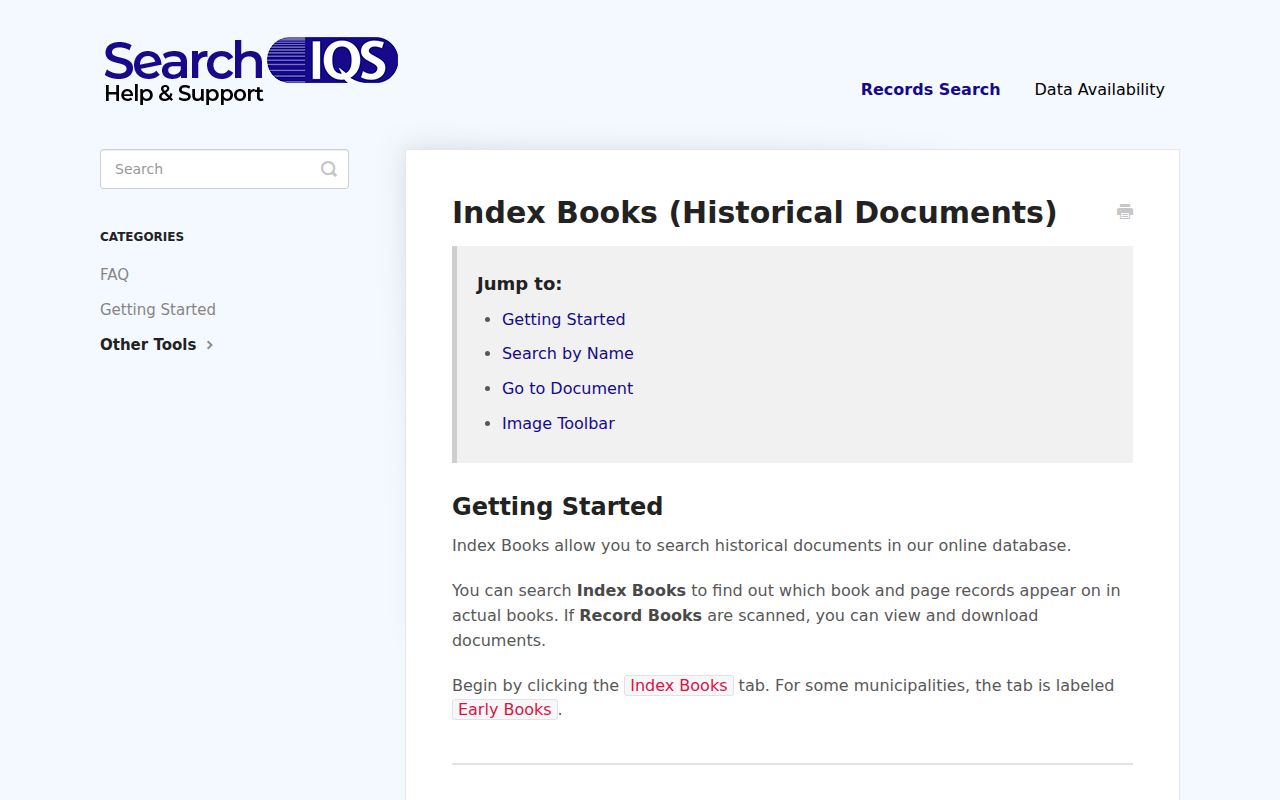
When the guest route does not return an image, note the volume, name, and book-page reference and ask the Town Clerk to check office books or copies. SearchIQS was challenged by Cloudflare during the research capture, so the office remains an important fallback.
Cheshire Previous Residents: Walk the Deed Chain Backward
Begin with the current assessor card, GIS parcel, MBL, unique ID, situs address, and legal description. Search the current owner as grantee in the Cheshire land index, use an approximate acquisition date, and inspect the document type, book/page, instrument number, grantor, and recording date. Then search that seller as an earlier grantee. Repeat until the index or image range ends.
- Record the current parcel key, map/block/lot, unit, and legal description.
- Search the current owner in SearchIQS by Party 1 or Party 2, Cheshire, date range, and document description.
- Open the deed or request the book-page reference, then write down the grantor and legal description.
- Search the grantor as a prior grantee and compare map, lot, and subdivision details.
- Move to IndexBooks, office books, or microfilm when an image or name index stops.
- Grantor
- The person or entity transferring an interest in the recorded document.
- Grantee
- The person or entity receiving that interest.
- Chain of title
- A linked sequence of recorded transfers for the same legal parcel.
- Legal description
- Boundary or map language that identifies the land when a street number changes.
A street name alone is too broad for a chain of title. The MBL, recorded map, lot, unit, and legal description keep similar numbers and split parcels apart.
Recorded Maps Keep Cheshire Previous Residents’ Lots Straight
Maps are the bridge when an old address does not line up with a current one. SearchIQS help lists Cheshire map coverage from 1856 forward. A recorded subdivision map can show lot layout, road names, revisions, easements, and the map or lot reference needed to connect one deed to the next. The recorded legal description controls when the GIS label or street number differs.
Use the Cheshire Town Clerk’s land-record page to find the map or ask for a copy. The map should be read with the parcel’s MBL and the deed’s legal description. A current parcel polygon is helpful context, but it does not replace a recorded map or legal survey.
Note: A new parcel, combined parcel, lot-number change, or boundary adjustment can make a past address look absent even when the land trail continues.
Cheshire Previous Residents’ Address Changes Can Break the Trail
The ArcGIS parcel schema includes EDIT_TYPE values for ADDRESS CHANGE, LOT NUM CHANGE, SPLIT PARCEL, COMBINED PARCELS, BOUNDARY ADJUSTMENT, NEW PARCEL, and ATTRIBUTE UPDATE. SOURCE_TYPE can identify a deed, tax map, subdivision scan, road as-built, GPS entry, or correspondence. These fields flag a continuity problem, but they do not by themselves prove when a number changed.
Search the current street and number first. Then compare the MBL, map/block/lot, legal description, old directories, recorded maps, and the Historic Viewer. Research did not verify a local renumbering year or a townwide street-renaming history. Ask the Assessor or Town Clerk for the official bridge instead of assigning a date from a guess.
The Cheshire GIS Historic Viewer is a visual lead for historic-property research. Its capture is shown below.
Tie any historic image or map location back to the current parcel and then verify the deed or map record. A visual match alone does not establish ownership.
Match an Old Cheshire Address to a Directory
People who lived at an address can appear in sources that never record ownership. The Library of Congress holds a genuine Cheshire telephone-directory run labeled April 1954 through 1961/62, with names, streets, exchanges, and telephone numbers. Cheshire Public Library confirms local city directories but does not publish exact shelf years or publishers online. Reverse or criss-cross holdings also need a staff or catalog check.
Read the street as the key. Compare adjacent directory years, keep the number and spelling, and test a move against a deed, newspaper citation, yearbook, obituary, or probate record. The Cheshire city directory collections page owns the details of the historical shelf, while this page follows one address through time.
Newspapers and Obituaries Close a Cheshire Trail
The Cheshire Public Library’s Newspaper Articles Index covers 1756-1922, but it is not comprehensive and has gaps. The Cheshire Herald obituary index covers 1953-2015, with the A-R segment identified online. A citation is the useful result. The library’s request form asks for a name, email, message, and the complete citation needed to locate the item.
Use a notice or obituary to test whether a household moved, a person died, or an estate transfer followed. Do not treat an index entry as a certified vital record. Pair it with the Town Clerk, DPH, probate file, cemetery inscription, or next recorded deed when the question needs stronger proof.
The library also has Cheshire High School yearbooks from 1955 onward, which can help reconnect former classmates or place a student in a dated local setting. A yearbook is historical identity evidence, not a current address statement.
Probate Explains a Cheshire Transfer
The Cheshire-Southington Probate Court is a separate route from the deed index. The district merged on January 5, 2011 and uses Town Hall at 84 South Main Street, with the public phone listed as 203-271-6608. Probate files can add an estate, will, fiduciary, or heir context to a deed transfer, but they are not an unrestricted online people search.
When an owner disappears from a parcel trail, compare the recorded deed with an obituary or newspaper citation, then ask the Probate Court for the relevant file or direct archival route. The Connecticut State Library can certify eligible probate and official records, while family-genealogy and newspaper pages are not certified through that route.
Keep the probate file, deed, and obituary as different evidence classes. An heir reference can explain why a transfer occurred, but the recorded instrument controls the parcel conveyance.
Sanborn Maps Are a Cheshire Research Gap
Sanborn fire-insurance maps can be useful in some house histories because they may show buildings, materials, and lot context for a dated period. The Library of Congress guide was reviewed during research, but no Cheshire-specific Sanborn map hit was verified. A generic Connecticut map reference should not be presented as a Cheshire record.
The Library of Congress Sanborn search guidance is shown below to explain the search method and the limit of the local result.
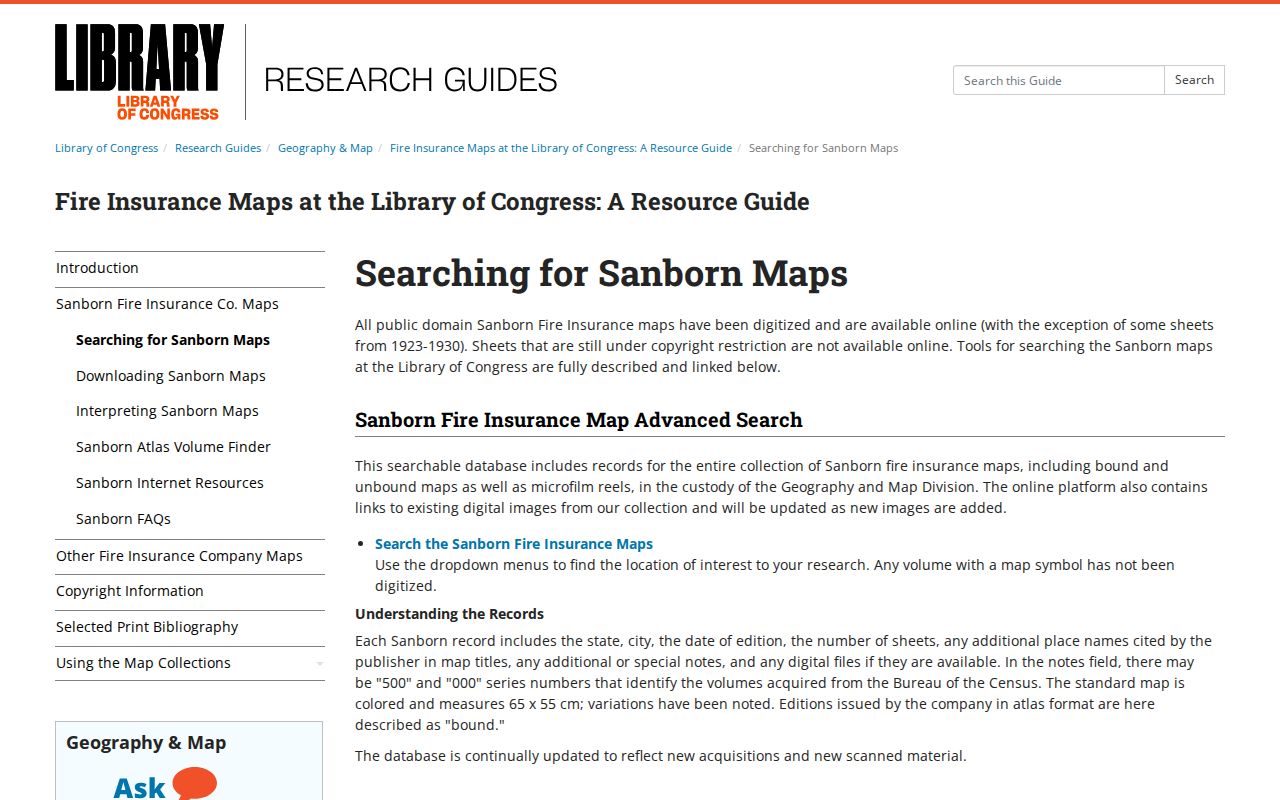
For a Cheshire house, use Town Clerk maps, GIS aerial layers, the Historic Viewer, library atlases, and Historical Society property files instead. If a future catalog search finds a Cheshire map, record the year and sheet before using it as evidence.
Past Cheshire Households Need Paired Dates
Owners are only half of previous-resident research. A directory or telephone listing can place a household at an address while the deed names a different party. Pair one directory year with the nearest released census schedule, then check the same address in the newspaper index, yearbook, obituary, or probate file. The latest publicly released decennial census is 1950 under the 72-year rule as of the research date.
- Normalize the surname, initials, married or widow notation, and spelling variants.
- Use the street and number as the anchor, then compare adjacent directory years.
- Bracket the directory with the nearest public census year and preserve the enumeration context.
- Test a move, death, or transfer with a library citation, cemetery source, probate file, or deed.
- Label every conclusion with its date and record type, never as a timeless current fact.
A disappearing name can mean a move, death, non-listing, a spelling change, or a missing volume. This is why a chain of dated records is more reliable than a single directory page.
Lawful house history. Cheshire previous residents research is appropriate for genealogy, family history, property history, and personal curiosity. Do not use an old address or living person’s record to stalk, harass, intimidate, or harm anyone.